Singapore matches US manufacturing efficiency to disprove overcapacity
Industrial occupancy rates near 90% signal tight land management rather than policy-driven excess production.
Singapore has submitted written responses to the Office of the United States Trade Representative (USTR), stating that it does not have forced labour in its supply chains and rejecting claims of industrial overcapacity, according to the Ministry of Trade and Industry (MTI).
The submissions were filed on 15 April in relation to two Section 301 investigations initiated by the USTR in March which allege failures to enforce bans on imports linked to forced labour and concerns over structural excess capacity in manufacturing sectors. The filing is now publicly available on the USTR docket.
On the forced labour investigation, Singapore said it does not tolerate forced labour and maintains a legal framework that criminalises such practices.
It cited provisions under the Penal Code 1871 and the Prevention of Human Trafficking Act 2014, with enforcement conducted by agencies including the Ministry of Manpower, the Ministry of Home Affairs and the Singapore Police Force.
Singapore said it is not aware of any goods produced with forced labour being exported from Singapore to the United States referencing US Department of Labor listings of goods produced with child or forced labour and US Customs and Border Protection records on Withhold Release Orders, noting that Singapore does not appear in either dataset.
It also said it has worked with US authorities in specific cases under the US Singapore Customs Mutual Assistance Agreement, including a 2024 request concerning an alleged palm oil shipment linked to forced labour, where Singapore Customs determined no such shipment originated from the country.
The government said enforcement of forced labour rules depends on cooperation between jurisdictions and access to evidence in producing countries, and noted that there is no single global framework governing forced labour-related import restrictions.
In its separate submission on industrial overcapacity, Singapore said its economy is highly dependent on trade, with total trade exceeding three times its gross domestic product.
It added that the United States has recorded a sustained surplus in both goods and services trade with Singapore over more than two decades.
Singapore said its trade flows are shaped by market conditions rather than policy-driven excess production, and noted that it has been a net exporter of goods since 1994 and services since 2018.
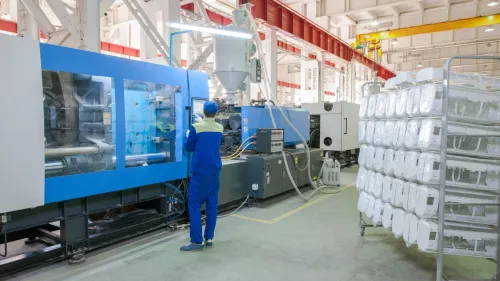
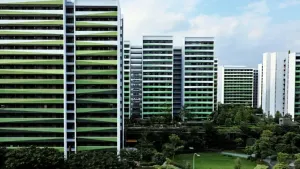
On industrial capacity, MTI said occupancy rates for manufacturing-related industrial space have remained close to 90% over the past five years, alongside steady growth in industrial prices and rents. It added that Singapore’s limited land supply is managed to support industrial demand.
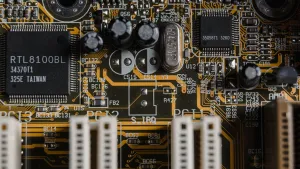
The ministry said the country’s manufacturing base has gradually shifted towards higher-value sectors such as semiconductors, electronics and pharmaceuticals, reflecting changes in skills, production structure and global demand.
It also said Singapore’s manufacturing capacity utilisation rate of 74.6% is broadly comparable with the United States at 74.4%, based on World Bank data.
MTI said Singapore’s approach remains market-oriented and reiterated its support for continued engagement with the United States on both issues.