Manufacturers push ProPak Asia to bigger Bangkok site
More than 2,500 brands from 45 countries are expected to join the 2026 trade fair.
ProPak Asia will expand into a bigger venue in Bangkok this year as rising demand for advanced processing and packaging technology pushes exhibitors to increase the scale of their displays.
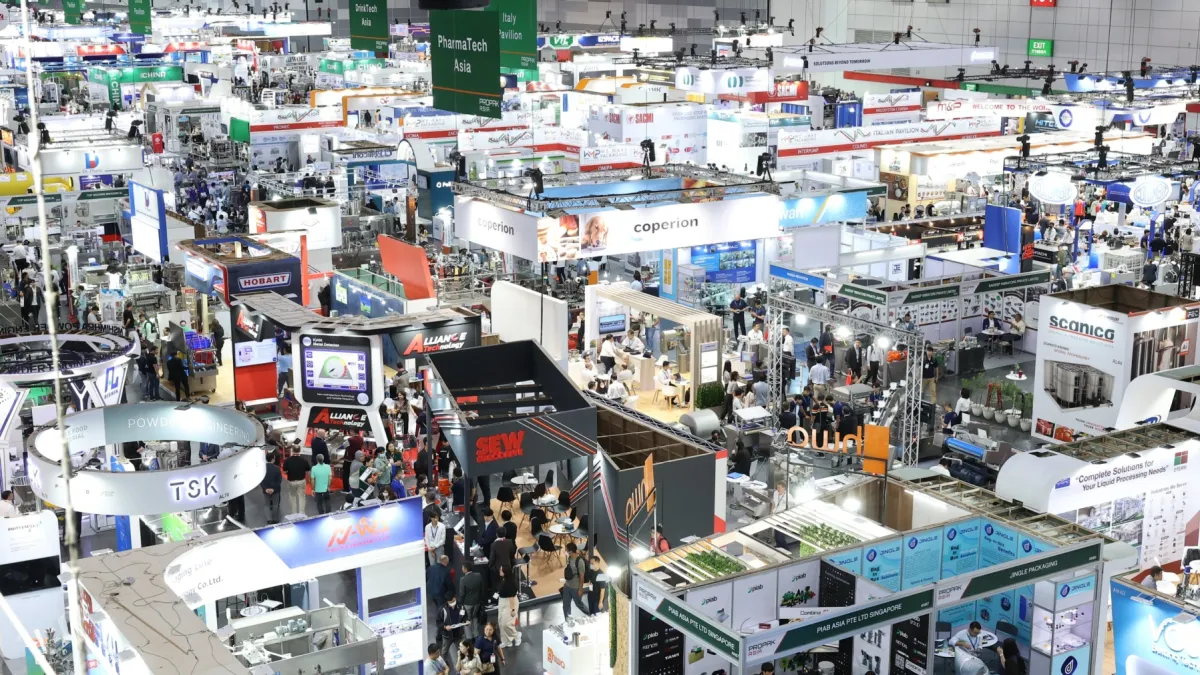
The trade exhibition, scheduled from 10 to 13 June, will move to IMPACT Challenger, lifting its exhibition space by about 20% to 65,000 square metres across three interconnected, column‑free halls. The layout is designed to accommodate large‑scale machinery and live production line demonstrations.
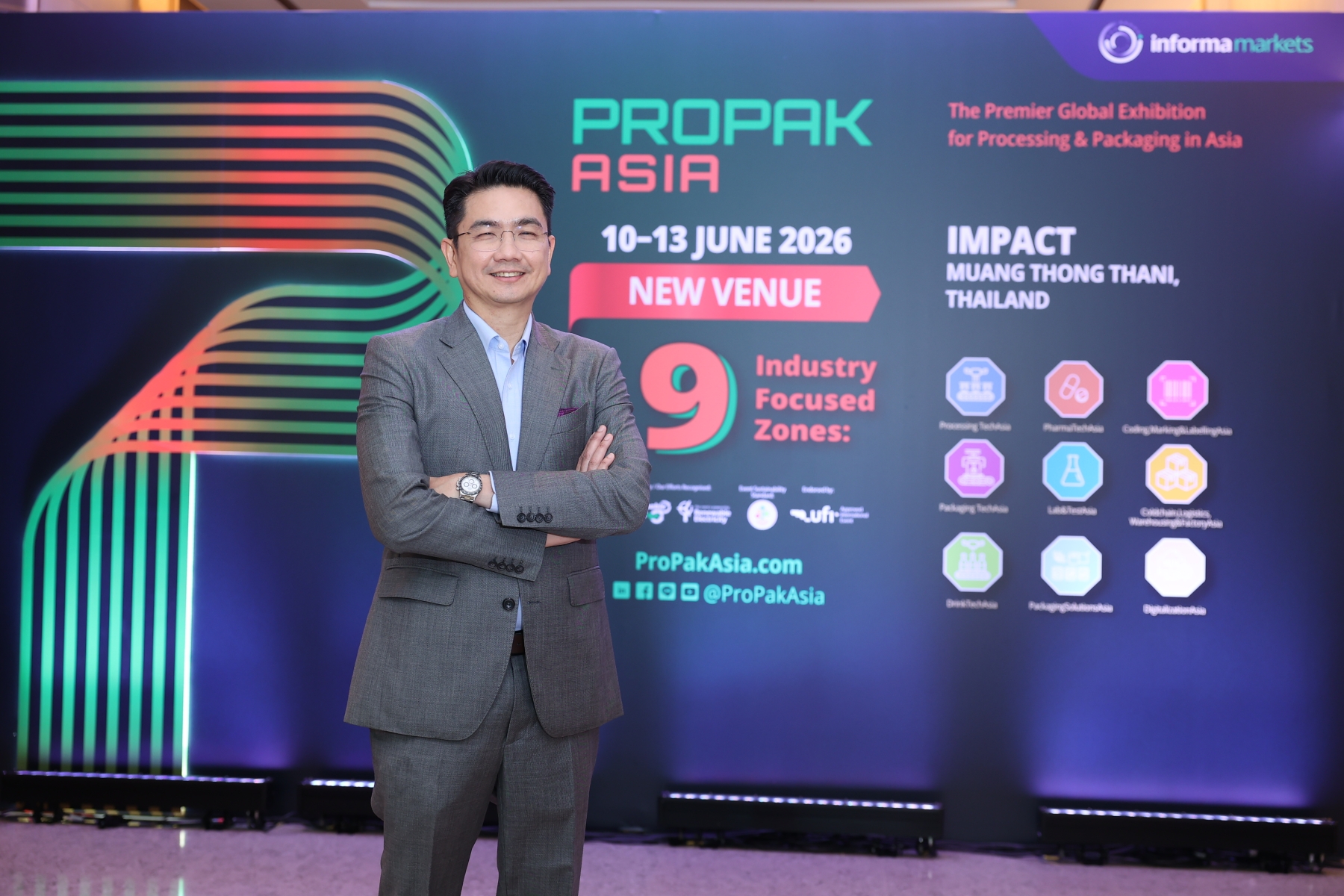
The move reflects stronger exhibitor demand and growing investment interest in Thailand, said Sanchai Noombunnam, Thailand country general manager at Informa Markets, the event’s organiser.
“We need to focus on expansion—not just participation, but also how to better connect industries and build a broader ecosystem beyond processing and packaging,” he told Manufacturing Asia on the sidelines of a news briefing in March. “That’s why we moved here and developed a four-year plan with IMPACT Muong Thong Thani.”
IMPACT is Thailand’s biggest integrated exhibition and convention complex, located in Nonthaburi, about 20 kilometres north of central Bangkok.
International and domestic companies are expanding participation as they seek greater exposure to Southeast Asia’s manufacturing base, he said.
Previous editions had reached capacity, limiting the ability to add demonstration areas, seminar rooms and networking spaces.
Last year’s event at the Bangkok International Trade & Exhibition Centre, which spans 54,000 square metres, was fully booked.
This year’s new venue also lets Informa pursue a longer‑term expansion plan with IMPACT, Noombunnam said.
More than 2,500 brands from 45 countries are expected to participate, with international exhibitors accounting for about 55%.
As of early March, about 95% of the exhibition space had been sold, equivalent to roughly 60,000 square metres. That compares with 55,000 square metres in 2025 and 49,000 square metres in 2024.
Organisers expect about 80,000 visitors, up from almost 73,000 last year. The show will feature 15 international pavilions spanning 14 countries and regions, including China, Japan, South Korea, Australia, Malaysia, and Singapore.
The 2026 programme will highlight automation, robotics, and artificial‑intelligence‑enabled systems, reflecting industry demand for greater efficiency and sustainability. Other focus areas include smart factories and Internet‑of‑Things‑based production monitoring.
Nine industry zones will cover processing, beverages, pharmaceuticals, packaging, laboratory testing, coding and labelling, cold chain and logistics, and factory systems. Digitalisation has been added as a standalone category.
During a media visit to KW Global Technology (Thailand) Co. Ltd.’s factory in March, the company demonstrated meat processing equipment from German suppliers Seydelmann Maschinenfabrik GmbH and Maurer‑Atmos Middleby GmbH.
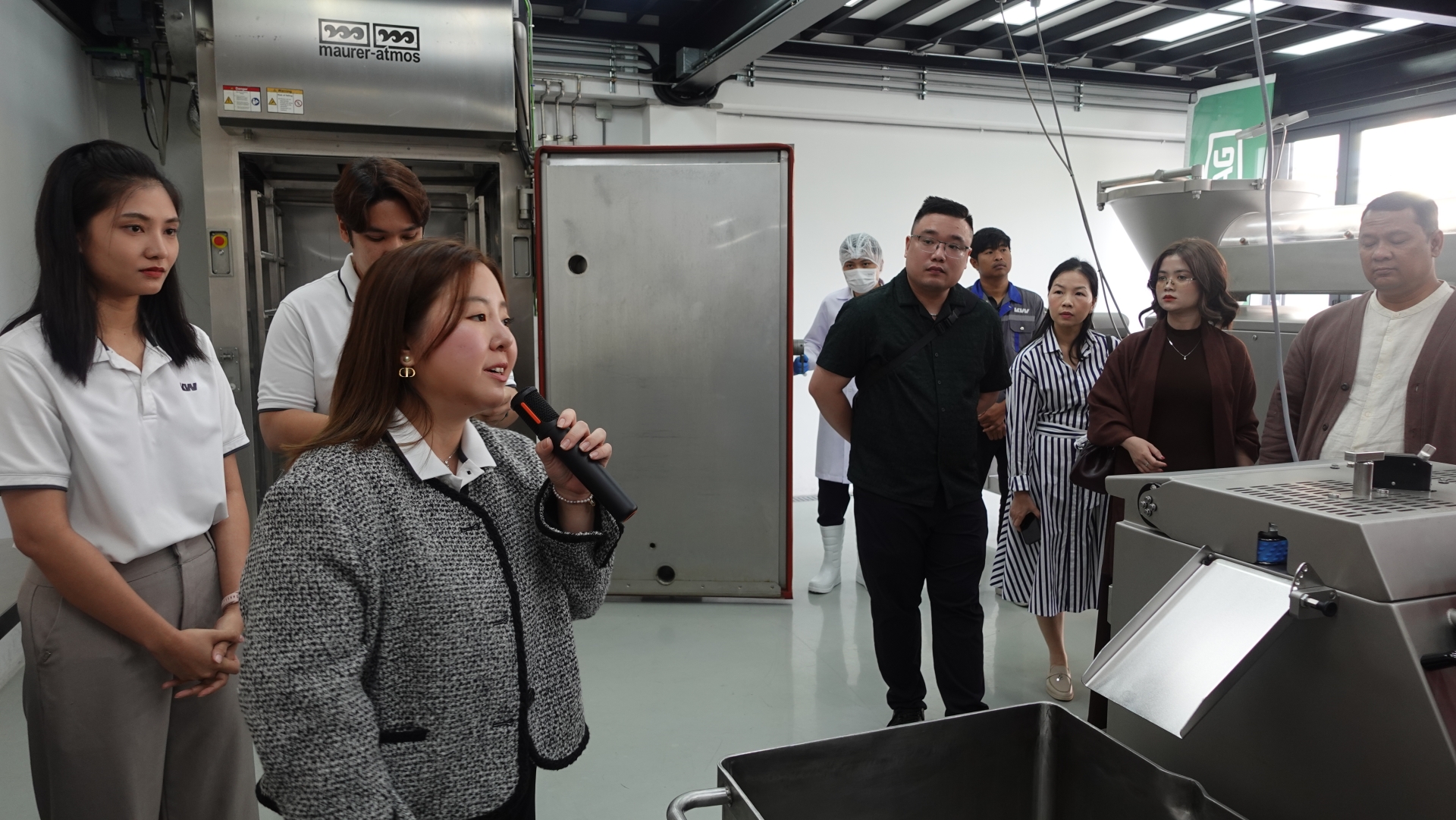
KW Group General Manager Chananya Toomaneechinda said manufacturers are shifting from maximising speed and volume to controlling precision and consistency.
Tolerance for production error has narrowed from around 5% to below 1%, helping firms cut waste and support sustainability targets.
Automation is being driven not only by labour shortages, but also by a lack of skilled technicians, she said.
Large manufacturers increasingly rely on technology to maintain consistency.
Noombunnam said wider adoption of smart technologies, faster digitalisation across supply chains, and stronger collaboration within the Association of Southeast Asian Nations (ASEAN) are shaping the industry.
“This year’s focus will turn towards how we can more efficiently utilise a sustainable framework for packaging products and longevity, safety and security,” he said. “How can we use and recycle the product without detriment? Education is key.”
Sustainability remains a key challenge as manufacturers seek recyclable materials without compromising performance.
The broader market continues to expand. Asia‑Pacific’s food packaging sector is projected to grow from about $175b in 2026 to more than $260b by 2035, driven by urbanisation, rising incomes, and demand for convenience foods, according to a Towards Packaging report.