Thailand shifts EV tax to reward manufacturing presence
It approved in principle a four-tier system built around local content.
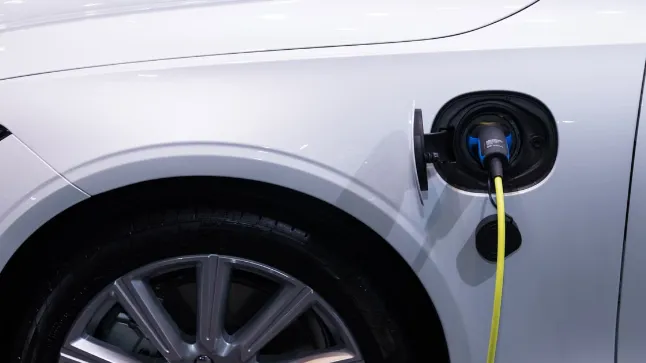
Thailand's National Electric Vehicle Policy Committee has given the go-ahead in principle to a new excise-tax structure that will reward car makers according to how much value they generate through manufacturing in the kingdom, rather than simply how many vehicles they sell.
The move, approved on 10 September, comes as battery, hybrid and plug-in hybrid vehicles have swelled to 55% of new vehicle registrations in Thailand over the first seven months of the year. Final tax rates and implementation rules have yet to be set.
Under the proposed framework, EVs would be sorted into four categories according to how much manufacturing presence and local value-creation lies behind them.
At the bottom sit fully imported EVs from manufacturers with no production plant in Thailand, which would face the steepest excise taxes. One rung up are automakers that do manufacture domestically but also import certain models — for these, the volume they are permitted to bring in would be tied to the economic value their Thai plants generated the previous year, effectively letting them test demand for new or lower-volume models without committing straight away to expanding local production.
The third tier covers EVs built in Thailand with a moderate level of local content but lacking key electronic components sourced domestically — aimed at giving lower-volume models room to deepen their Thai sourcing over time. At the top, EVs manufactured locally with a high proportion of domestic content, particularly home-grown electronic components, would receive the most favourable tax treatment on offer.
For car makers that already have factories in Thailand, the proposal effectively creates a new calculation around sourcing: whether pushing further into local content — especially domestically produced electronics — is worth it for the tax treatment gained, or whether staying at a moderate level of localisation remains the more economic choice.
Manufacturers already committed to Thailand's EV 3.5 scheme, which ties support for imported EVs to subsequent local production, will need to weigh the new excise structure alongside those existing obligations rather than in isolation, since the proposed tax rules would sit on top of — not replace — the EV 3.5 requirements.
With rates and detailed rules still unpublished, manufacturers cannot yet run the numbers on exactly how the choice between import-led sales, Thai manufacturing, and deeper local sourcing will play out financially.